
7 Minutes Read
What Towing an Off-Road Trailer Is Really Like
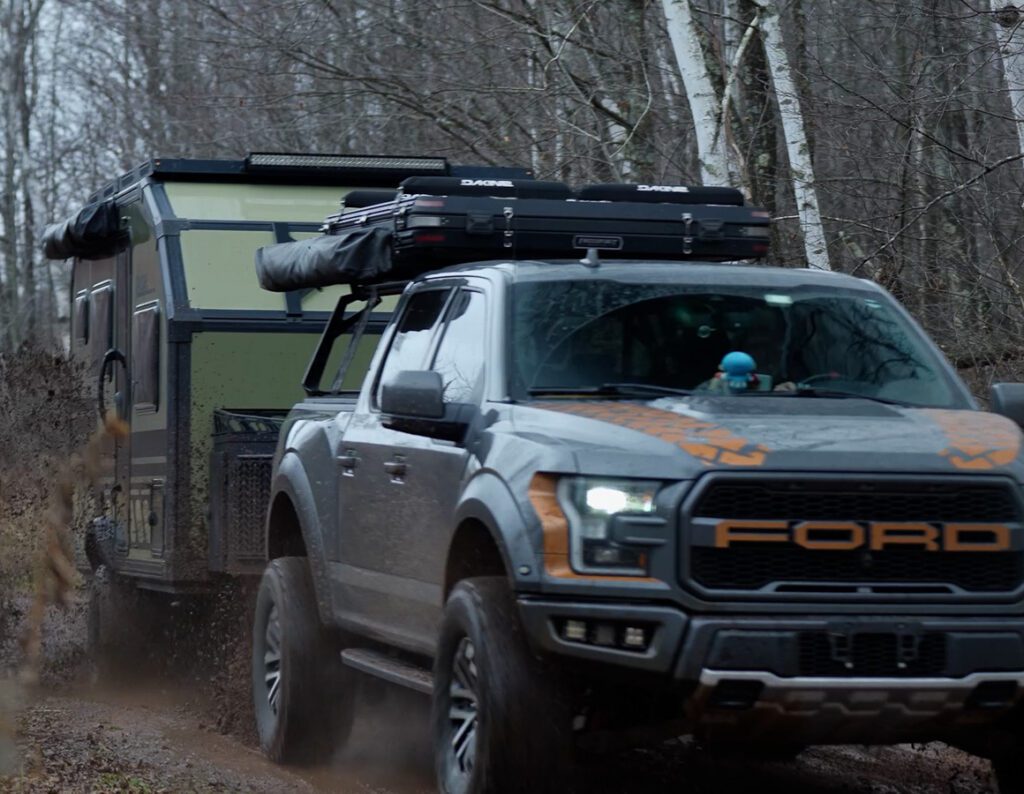
OWNER’S GUIDE
What Towing an Off-Road Trailer Is Really Like
Honest answers to the questions every new owner has — but doesn’t always think to ask.
If you’ve towed a boat, a utility trailer, or a conventional camper before, towing an off-road trailer will feel familiar in some ways — and different in a few important ones. Here’s what to actually expect.
The anxiety is normal. Almost every first-time trailer owner feels it on that initial drive out of the dealer’s lot — a heightened awareness of every lane change, every braking distance, every low-clearance sign on the highway. Within a few hours, most of that settles. Within a trip or two, towing becomes second nature.
But there are things worth knowing before you go. Not to alarm you — to prepare you. An off-road trailer built for serious backcountry use handles differently than a travel trailer, and the terrain you’ll eventually be exploring demands a little more awareness than the interstate. Let’s walk through it honestly.
How the Truck Feels Different
The first thing you’ll notice is weight — not dramatically, but perceptibly. Your truck will accelerate more deliberately, brake over a longer distance, and feel more committed to its lane. None of this is alarming; it’s just physics, and you adapt to it quickly.
What surprises more first-time towers is how the trailer affects the truck on grades. Descending a long mountain pass with a trailer behind you is a fundamentally different experience than doing it solo. Engine braking becomes your best friend. On steep descents, shift to a lower gear and let the drivetrain do the work rather than riding the brakes — you’ll arrive at the bottom with cooler brakes and more confidence.
On the highway, crosswinds deserve more respect than usual. A gust that barely registers in a solo truck can push a trailer meaningfully. The fix is simple: slow down slightly, keep two hands on the wheel in exposed stretches, and give yourself a little more following distance than you’re used to.
GOOD TO KNOW
Your Imperial trailer is built with a low center of gravity specifically for off-road stability. The Cruisemaster articulating hitch system is engineered to handle rough terrain and uneven pavement alike, and the 31–32 inch all-terrain tires that make the trailer capable off-road also contribute to stable, predictable highway tracking.
Before You Leave the Driveway
A pre-departure walk-around takes about five minutes and will save you significant headaches. Make it a habit from the start — experienced towers do it every single time, without exception.
-
HITCH CONNECTION
-
Check that the hitch ball is fully seated, the coupler latch is locked, and the safety pin is in place. Give the trailer tongue a firm upward lift — it should not separate from the ball.
-
-
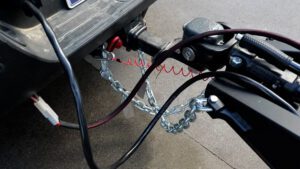
SAFETY CHAINS
-
Cross them under the tongue in an X pattern with enough slack to turn but not drag. They’re your backup if the hitch ever fails.
-
-
ELECTRICAL CONNECTION
-
Plug in and confirm brake lights, turn signals, and running lights are functioning. Have someone stand behind the trailer while you work the controls.
-
-
BREAKAWAY CABLE
-
This cable triggers your trailer’s brakes if it ever separates from the hitch. Attach it to a solid point on the truck — not the hitch itself.
-
-
TIRE PRESSURE
-
Check both the trailer tires and your truck tires before any significant trip. Proper inflation affects handling, fuel economy, and tire life on rough terrain.
-
-
LOAD AND LATCHES
-
Walk around and confirm all storage compartments are latched, nothing is unsecured on top, and the weight inside is distributed evenly — heavier items low and centered.
-
On Pavement vs. Off Road — Two Different Skills
Highway towing and off-road towing are genuinely different disciplines, and it’s worth thinking about them separately.
On pavement, your primary adjustments are speed management, following distance, and lane awareness. Give yourself more room to stop than you think you need. Signal earlier than you normally would. When changing lanes, remember your trailer tracks slightly inside your truck on curves — a turn that clears your truck’s rear corner may not clear the trailer’s.
Off-road is slower, more deliberate, and more rewarding. The calculus shifts entirely. Speed becomes almost irrelevant — most serious backcountry travel happens at 10 to 25 miles per hour. What matters instead is line selection, articulation, and reading the terrain ahead.
OFF-ROAD TIP 01
Pick your line for the trailer, not just the truck
Your rear wheels cut inside your front wheels on turns. The trailer cuts inside further still. On tight switchbacks and rocky two-tracks, always think two moves ahead.
OFF-ROAD TIP 02
Momentum is your friend on loose terrain
Stopping on a steep, loose climb with a trailer behind you is difficult to recover from. Maintain steady, controlled momentum rather than stopping and starting.
OFF-ROAD TIP 03
Approach angles matter more than you think
The trailer’s tongue can contact the ground on steep transitions. Approach dips, water crossings, and ledges at an angle when possible to keep the tongue clear.
OFF-ROAD TIP 04
When in doubt, get out and look
There is no shame in walking a tricky section before driving it. Five minutes on foot saves hours of recovery. The most experienced off-roaders do this regularly.
Backing Up — The One Skill Worth Practicing
Backing a trailer is the part that makes new owners the most nervous, and the part that becomes second nature fastest with practice. The key insight: when reversing, the trailer turns opposite to how you steer. Turn your wheel left, the trailer goes right.
The most effective way to get comfortable is to practice in an empty parking lot before you need to do it in a real situation. Set up some cones or use painted lines as guides. Give yourself thirty minutes on a quiet weekend and you’ll leave with real confidence.
A few things that help in the field: back slowly — always. Use a spotter when your wife or a fellow camper is available. Your mirrors are your primary tools; use both of them. And if you jack-knife and need to start over, simply pull forward and straighten out. It’s not failure, it’s technique.
“The first time I backed into a campsite, I pulled out three times before I got it right. By the end of the trip, I was doing it in one shot. It just takes a little patience with yourself.”
What Gets Easier Faster Than You’d Expect
Most new owners are pleasantly surprised by how quickly towing stops feeling like a big deal. The spatial awareness — knowing where your trailer is, how it’s tracking, how much room you have — becomes instinctive surprisingly fast. The pre-departure routine becomes automatic. Backing up becomes another skill in the toolkit, not a source of dread.
What experienced towers will tell you is that the learning curve is real but short. A few trips in, you stop thinking about the trailer and start thinking about where you’re going. Which is exactly the point.
The country you’re about to access — the high-clearance two-tracks, the mountain passes, the remote canyons that most people never reach — is worth every minute of that learning curve.