
6 Minutes Read
Chasing Fall: Five Camping Destinations Worth the Drive
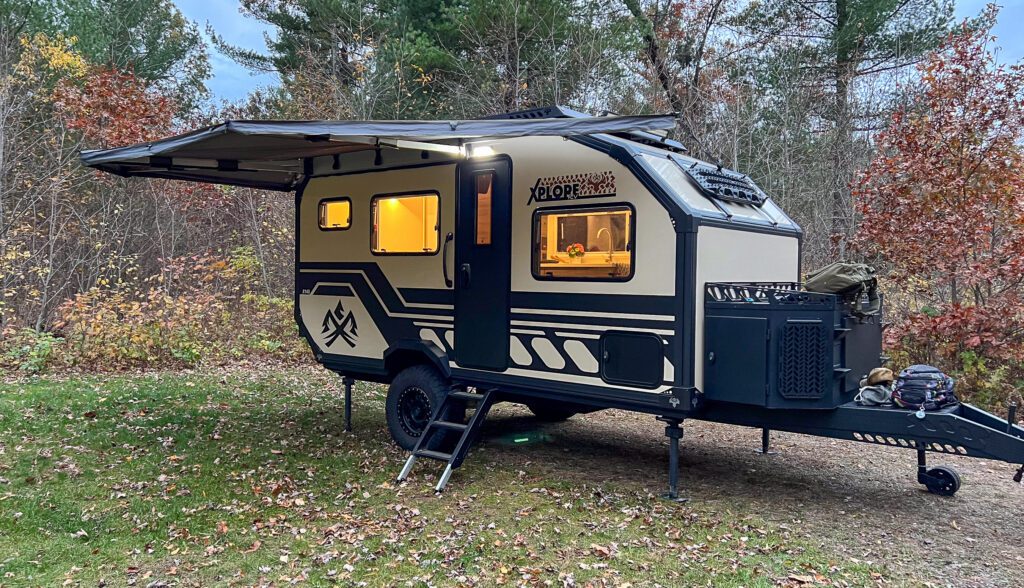
Fall is the best kept secret in camping. The crowds thin out, the bugs disappear, the light turns gold in the afternoons, and the trails you fought for a spot on in July are suddenly wide open. It’s also the season that separates a trailer that’s along for the ride from one that’s actually built for it. Cooler nights, earlier dark, gravel forest roads that summer traffic never touches, that’s where Imperial Outdoors trailers are meant to be. Here are five places worth pointing the hitch toward this year.
The White Mountains, New Hampshire
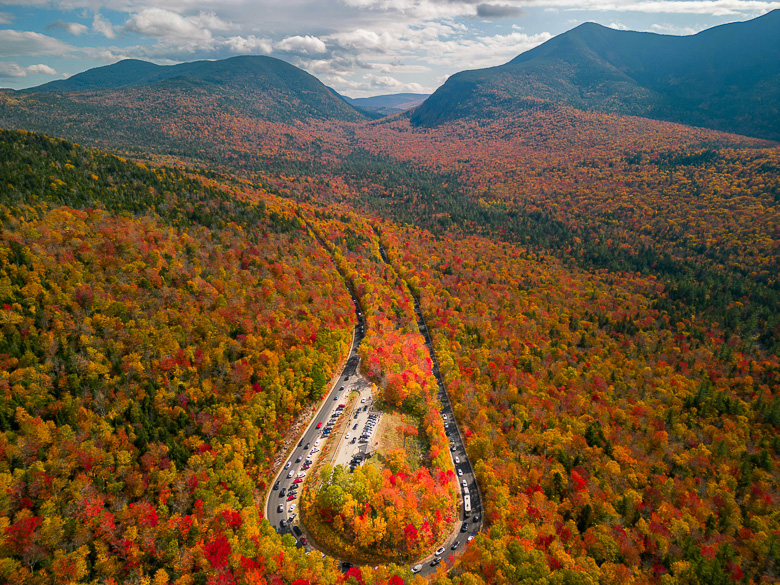
The Kancamagus Highway gets all the postcards, but the real draw for a trailer is everything branching off it. White Mountain National Forest is laced with forest roads that lead to dispersed sites along rivers and ridgelines, most of them empty on a weekday once the highway traffic thins toward dusk. Peak color usually lands in the first half of October, though it shifts year to year with elevation and weather, so it’s worth checking current reports before you commit to a weekend.
- Peak color window: typically early to mid October
- Access: paved highway with forest road spurs, some rough enough that ground clearance and a capable suspension matter
- Good to know: weekends fill fast, weekdays are a different world
Blue Ridge Parkway and the Great Smoky Mountains, North Carolina and Tennessee
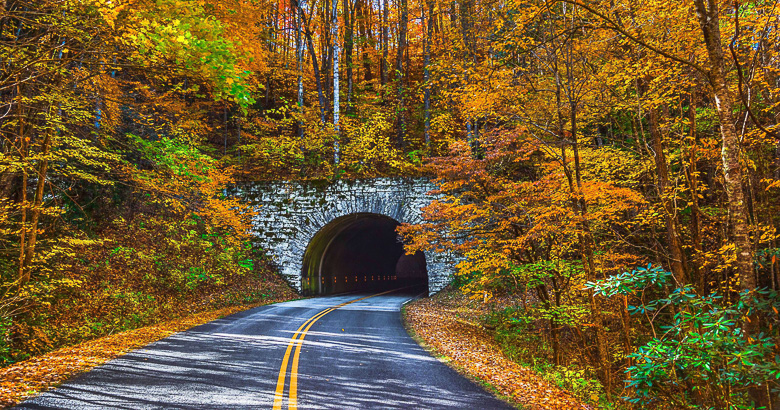
Because the Parkway climbs and drops through such a wide elevation range, color season here doesn’t hit all at once, it rolls through over several weeks, which means a longer window to catch it than almost anywhere else in the country. Pisgah and Nantahala National Forests, both within easy reach of the Parkway, hold dispersed sites down forest roads that summer visitors mostly skip in favor of developed campgrounds. Mornings bring the fog the Smokies are named for, which makes for a genuinely different kind of camping than the clear high country out west.
- Peak color window: rolls through from early September at high elevation to early November down low
- Access: paved Parkway with gravel forest road access to dispersed sites, some backcountry areas require a permit
- Good to know: fog and rain are part of the deal here, pack accordingly
Fall camping rewards the trailer that doesn’t need a full hookup to be comfortable. The best sites are almost never the ones with power pedestals next to them.
The Northwoods, Wisconsin and Upper Michigan
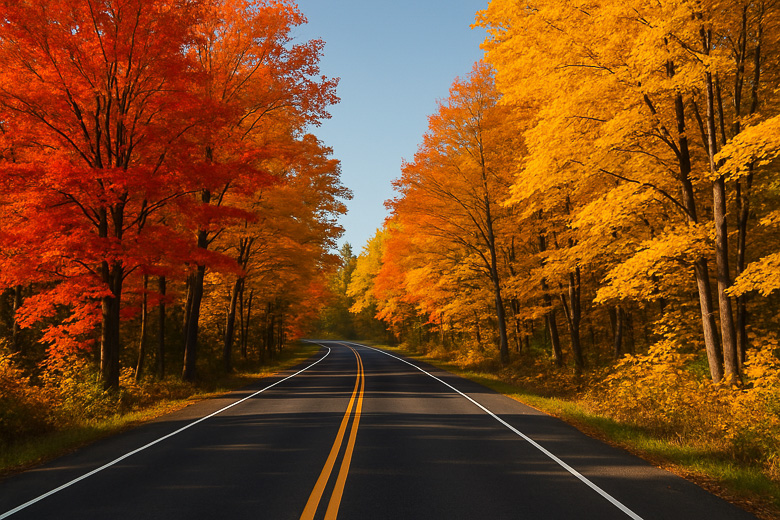
This one’s close to home, Imperial Outdoors is built in Saint Croix Falls, Wisconsin, and the Northwoods is where a lot of our own trailers spend their fall weekends. Chequamegon-Nicolet National Forest and the Porcupine Mountains across the Michigan line turn a deep gold and red through maple and birch stands, and the lake access up here means quiet mornings with mist rising off the water. It’s a quieter, less crowded alternative to the bigger-name fall destinations, and forest roads throughout the region offer plenty of dispersed camping if you know where to look.
- Peak color window: typically late September through early October
- Access: forest roads, generally well maintained but can turn to mud after rain
- Good to know: lake country means bugs linger a little later here than elsewhere on this list, though nothing like summer
The San Juan Mountains, Colorado
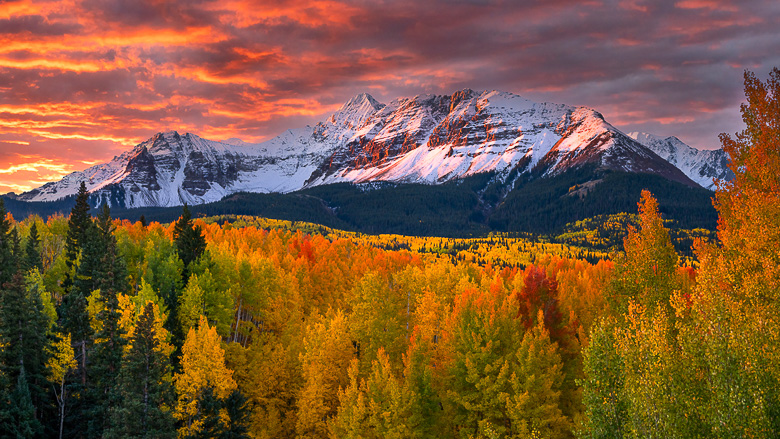
Aspen gold in the San Juans is one of those things that looks fake in photos until you’re standing in it. The color usually peaks in late September to early October depending on elevation, and the higher you go, the earlier it turns. The Million Dollar Highway corridor through Silverton and Ouray connects to San Juan National Forest roads that climb into genuinely high alpine country, some of it rough enough that a capable off-road trailer is the difference between a great weekend and a turned-around one. Nights get cold fast up here, even when the days are still warm, so plan for real temperature swings.
- Peak color window: typically late September into early October, earlier at higher elevations
- Access: paved highway with high-clearance forest roads, some routes are genuinely rugged
- Good to know: check for early snow advisories at elevation, it happens sooner than people expect
Zion and the Moab Area, Utah
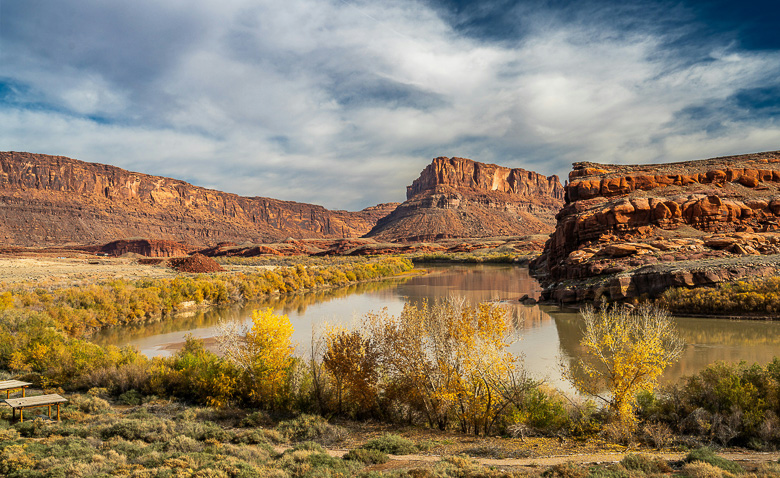
Fall isn’t just tolerable in red rock country, it’s arguably the best season for it. The brutal summer heat breaks, the cottonwoods along the washes and rivers turn a bright yellow against the sandstone, and the BLM land surrounding Moab opens up miles of dispersed camping that’s simply unbearable to use in July. Nights cool off significantly once the sun drops, which is when a trailer with a real furnace and properly insulated tanks starts to matter rather than just being a nice-to-have.
- Peak color window: cottonwoods typically turn in late October, though the desert scenery works all fall
- Access: extensive BLM roads around Moab, conditions range from graded gravel to genuinely technical
- Good to know: water sources are scarce, plan tank capacity accordingly
A Few Things Worth Knowing Before You Go
Fall camping, what most people call shoulder season camping, is a different discipline than summer camping, mostly because the margin for error shrinks. Days get shorter, so you’re setting up and leveling in fading light more often than you’d like, which is where a system like the Cruisemaster BCS on the Xplore series earns its keep, one button gets you level and stable without fumbling around a site in the dark. Temperatures swing harder between day and night, sometimes 40 degrees or more in a single afternoon, so layers matter more than any single piece of gear. Water and holding tanks that freeze overnight are a real risk once you’re camping into late fall, which is part of why Imperial builds heated, enclosed tanks rated to −40°F into every trailer, worth a closer look in our cold weather camping guide if you’re planning to push the season further than most people do. And if you’re heading somewhere without hookups, which is most of the best fall spots, staged solar on the Sport series or the full Victron system on Xplore means shorter days don’t have to mean rationing power.
The Right Rig Makes Fall Season Longer
Most people’s camping season ends the day the nights get cold and the campgrounds start closing for winter. It doesn’t have to. An Imperial Outdoors trailer is built to handle the forest roads, the temperature swings, and the off-grid nights that fall camping actually demands, whether that’s the Xplore series tackling rougher backcountry routes with auto-leveling and a full power system, the Sport series with staged solar for longer stays off the grid, or the Outback series for a simpler, capable way into the season. However you like to camp, Imperial Outdoors builds the trailer that keeps fall from ending early. Compare the full lineup on our Compare Models page, or find a dealer near you to see one in person at Find a Dealer.