
7 Minutes Read
Cold Weather Camping:
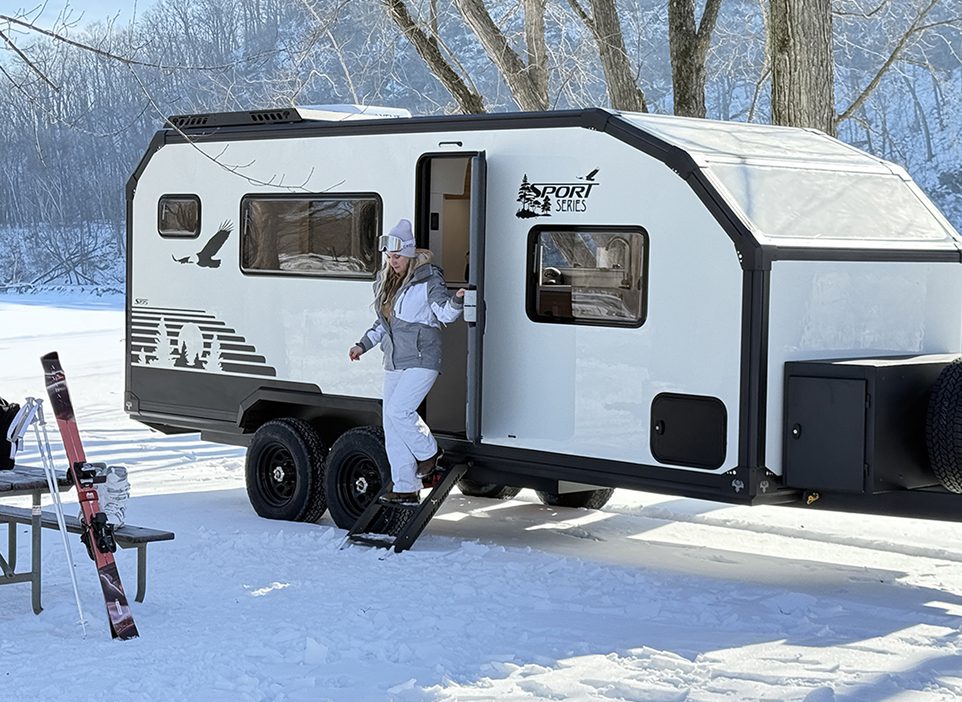
ALL-SEASON GUIDE
RATED TO −40°F
Cold Weather Camping:
What to Prep and What to Expect
Winter doesn’t have to end your season. With the right basecamp, it might become your favorite one.
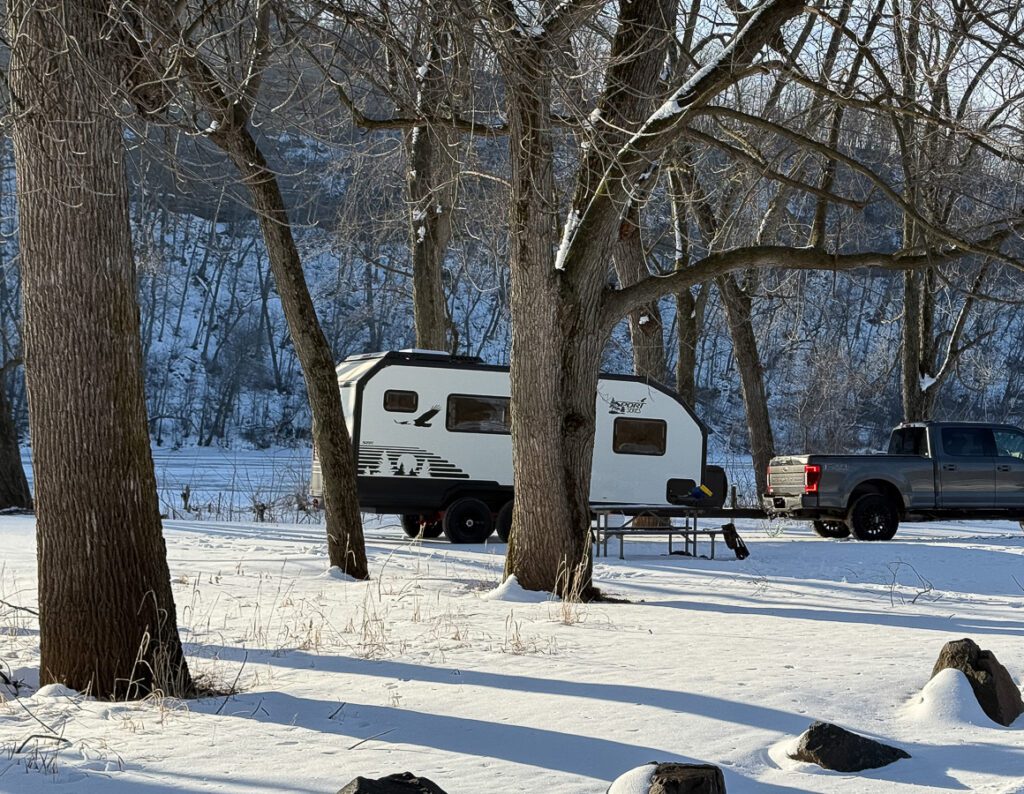
Most campers pack it in when the temperature drops. The mountains empty out, the trailheads go quiet, and the best terrain in the West belongs to whoever had the foresight — and the right setup — to stay.
Winter overlanding in a purpose-built all-season trailer is a different experience than anything most people have had outdoors in the cold. The trailer handles the elements. You focus on the adventure. That’s the whole idea — and when the equipment is engineered correctly, it works exactly that way.
Here’s what to know before your first cold-weather trip, what to expect out there, and why winter might just become the season you look forward to most.
Built for Real Cold — Not Just Rated for It
There’s a meaningful difference between a trailer that claims cold-weather capability and one that’s engineered for it from the ground up. Imperial trailers are built to operate without compromise at temperatures down to −40°F. Nearly 3-inch thick fully insulated wall panels, heated water tanks, and the Truma Combi furnace and water heater system work together to keep everything functional regardless of what the temperature does outside.
That’s not a marketing claim. It’s a design philosophy that shapes every decision made in the build — from the insulation values to the Truma Combi’s output capacity to the heated tank design. The result is a trailer you can take into genuine winter country and simply use, without the checklist of workarounds that lesser rigs require.
COLD RATING
−40°F
Full system operation at extreme cold — no exceptions, no compromises.
PLUMBING
Heated Tanks
Heated water tanks keep everything functional when temperatures drop well below freezing.
HEATING
All-Season
Purpose-built forced-air system sized for sustained operation in genuine winter conditions.
Why Ski Country Is Perfect Overlanding Territory
The same mountain geography that produces world-class skiing — deep snowpack, high elevation, dramatic terrain — also produces some of the most spectacular winter overlanding in North America. And here’s the thing the resort crowd mostly misses: the best access to that country isn’t always through the lodge. It’s down the forest road that most people assume is closed.
An Imperial trailer parked at the trailhead, five miles from the resort boundary, is a fundamentally different ski experience than anything you book through a hotel. You wake up in the mountains, not in a valley town. First chair isn’t something you race other guests to — it’s a short drive from wherever you camped. And when the lifts close, you go back to your own space, your own kitchen, your own schedule.
01 THE ADVANTAGE
Ski-in proximity without resort prices
Position your basecamp within minutes of the mountain rather than commuting from a distant hotel. Your savings over a week of lodging are considerable.
02 THE ADVANTAGE
Gear that’s always ready
Skis, boots, poles, layers — organized and accessible in your trailer rather than crammed into a rental car or a hotel closet. Mornings are faster and easier.
03 THE ADVANTAGE
Backcountry access on rest days
Not every day has to be the resort. Snowshoe trails, Nordic routes, and backcountry terrain are often right outside your camp. A rest day becomes something else entirely.
04 THE ADVANTAGE
The après ski that actually matters
A hot meal, a warm trailer, and a quiet mountain evening. No crowded lodge bar, no shuttle back to the valley. The best part of the day happens at your own pace.
What to Pack — and What the Trailer Handles for You
One of the pleasures of a well-engineered all-season trailer is how much it removes from your pre-trip mental load. You don’t need to think about antifreeze, tank heaters, or whether your water system will survive the night. The trailer manages all of that. What you’re left preparing is the personal gear — and a few common-sense considerations for winter travel.
LAYERED CLOTHING SYSTEM
-
-
The trailer is warm, but you’ll be outside in serious cold. Merino wool or synthetic base layers, a solid mid layer, and a waterproof shell handle most mountain winter conditions. Avoid cotton next to skin — it loses all insulating value when damp.
-
BEDDING FOR THE TEMPERATURE YOU’RE CAMPING IN
-
-
Even with the furnace running, a quality sleeping bag rated for your expected low is smart insurance. It also gives you the option of sleeping in a cooler trailer if you prefer it.
-
TRACTION FOR THE TRUCK
-
-
Quality all-terrain or dedicated winter tires on your tow vehicle are not optional in serious snow country. Chains are worth carrying for the unexpected. Your trailer handles the cold; your truck still needs to move through it.
-
RECOVERY GEAR APPROPRIATE TO THE SEASON
-
-
A collapsible snow shovel, traction boards, and a quality tow strap round out a sensible winter kit. Snow changes the recovery calculus — soft shoulders, hidden ditches, and reduced visibility all deserve respect.
-
EXTRA FUEL AND PROVISIONS
-
-
Winter trips have a way of extending themselves. A storm rolls in, the powder is too good to leave, the road you planned to take is unplowed. Build a day or two of buffer into your food and fuel supply and you’ll never feel rushed.
-
A NOTE ON SOLAR IN WINTER
Shorter days and a lower sun angle mean less daily solar recharge than you get in summer. Your system still works — just plan for more conservative power use on extended trips, and prioritize your heating fuel supply over electrical loads wherever the two overlap.
What Nobody Tells You About Winter in the Mountains
The cold is real, and it deserves respect. But it also comes with things that warm-season camping simply cannot offer. The air is different — sharper, cleaner, with that particular stillness that only comes after snowfall. The light at altitude in winter is extraordinary: low-angle and golden in the morning, long into the afternoon, with colors on the peaks that summer hikers never see.
The crowds are gone. The roads that were gridlocked in July are empty. The campsite you’ve been thinking about all year is yours, on a Tuesday in February, with nobody within two miles of you.
“We skied three days, snowshoed one, and spent one morning just drinking coffee and watching it snow. It was the best trip we’ve taken in years — and we almost didn’t go because it was cold.”
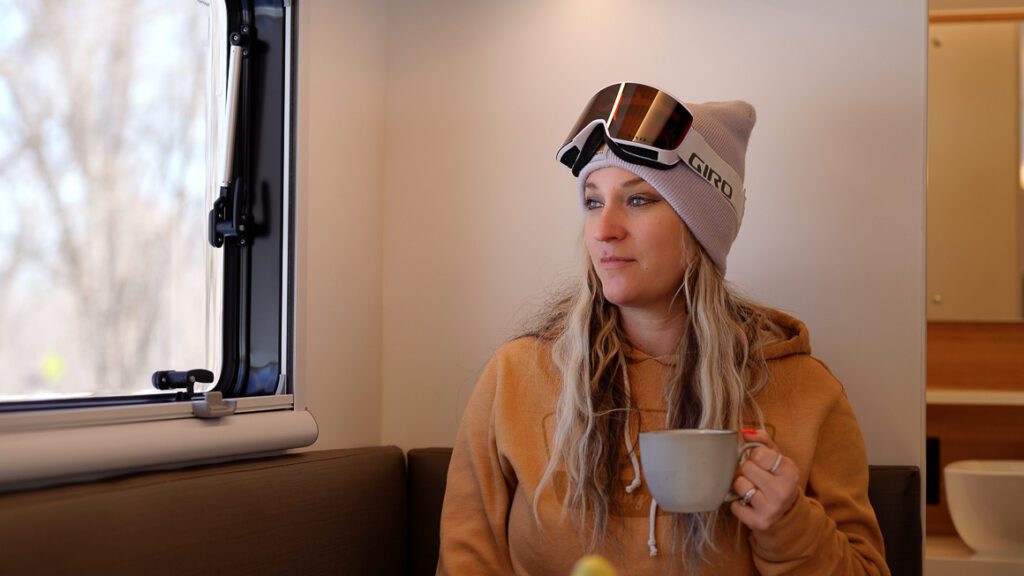
The people who discover winter overlanding almost universally say the same thing afterward: they wished they’d started sooner. The barrier was never the cold. It was having a basecamp capable of handling it.
Choosing Your Winter Destination
The western mountain states offer some of the finest winter overlanding terrain anywhere. A few regions worth considering for a first cold-weather trip:
The Colorado Rockies — Summit County, the San Juan Mountains, and the areas surrounding Steamboat Springs — offer a combination of accessible forest roads, world-class skiing, and spectacular terrain that’s hard to match. Utah’s Wasatch Range and the area around Brian Head provide similarly stunning conditions with slightly less elevation for those easing into high-altitude winter camping. Wyoming’s Bridger-Teton country is more remote and more rewarding for those who want genuine solitude with their ski access.
In all of these areas, a quick call to the local ranger district before you go is worthwhile — not because access is typically restricted, but because local knowledge about road conditions, recent snowfall, and site availability will make your trip better.